
Two cities, one offsite, zero room for error
The first time I ran logistics for a group splitting time between Rome and Umbria, I made a mistake that cost us four hours and nearly a wine tasting. I'd booked a single fleet of vans to carry forty executives from the Hotel de Russie on Via del Babuino straight to Castello di Reschio, near Umbertide, without checking that the narrow strada bianca leading up to the property couldn't handle a sixteen-seat Mercedes Sprinter. We ended up transferring luggage onto smaller cars at a gas station outside Umbertide while a group of very patient Chicago bankers stood in the gravel lot checking their watches. Nobody missed the welcome dinner. But I learned that a multi-city Italian offsite isn't really about the cities at all. It's about the seams between them.
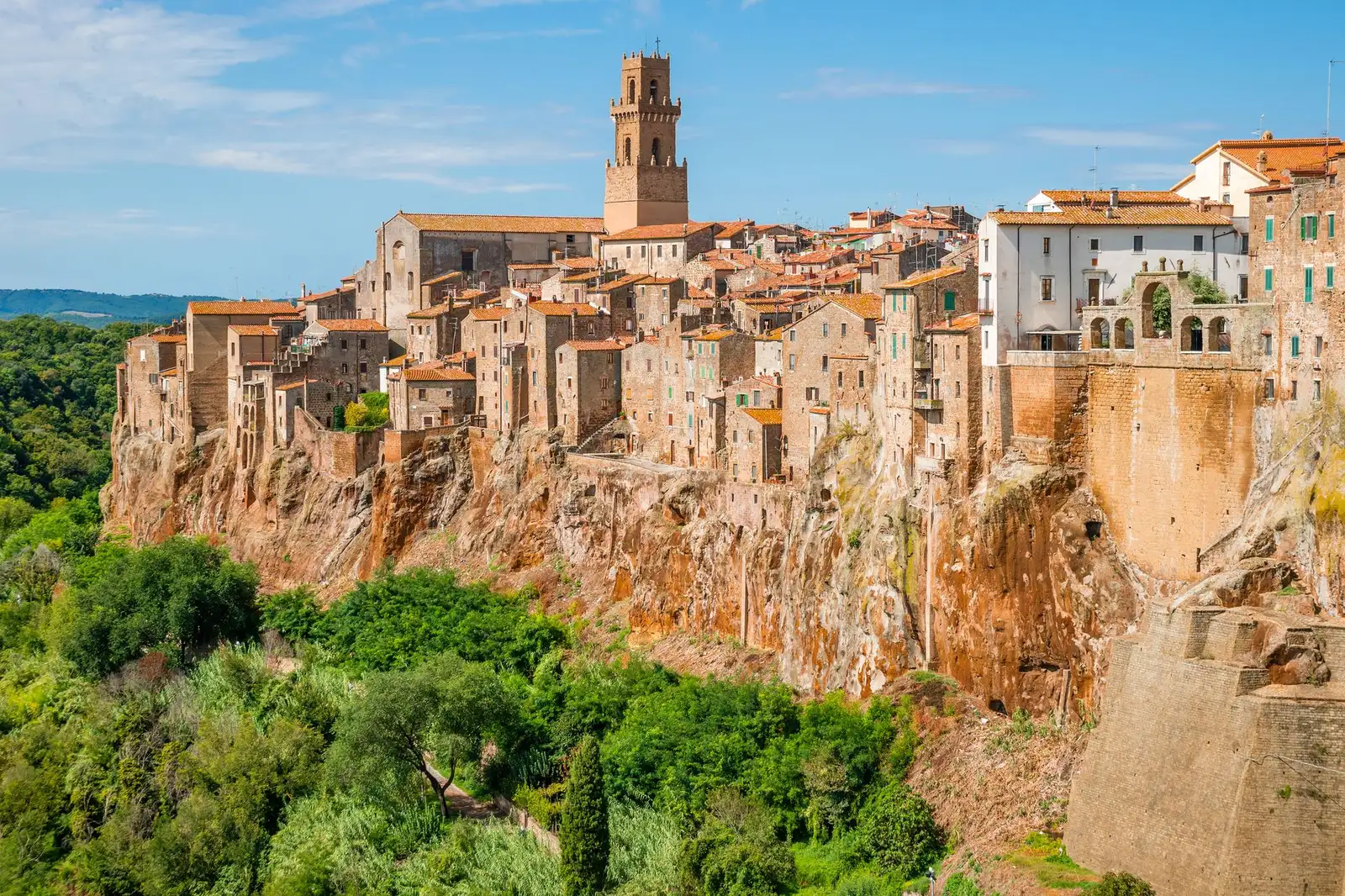
Rome and Umbria sit about ninety minutes apart by car, closer to two hours by regional train, and they could not feel more different from one another if you tried. Rome gives a group density, history, restaurants that have been open since before the unification of Italy, and a pace that never quite slows down even at midnight near the Pantheon. Umbria gives the opposite: stone farmhouses, vineyards outside Montefalco, a silence at dusk that most executives haven't heard in years. Pairing the two in one offsite can work beautifully. It can also fall apart in the gap between hotel checkout in Rome and dinner in a converted olive mill three hours later, if nobody has mapped that gap in detail.
Why the order you visit them in changes everything
Most planners default to Rome first and Umbria second, treating the city as a welcome and the countryside as a reward. There's a logic to that. Arriving groups are jetlagged, and a dense urban base near Fiumicino lets people recover in a hotel with room service and decent espresso before you ask them to function on a strategy day. Rome absorbs the chaos of international arrivals in a way a hillside property outside Spoleto simply can't.
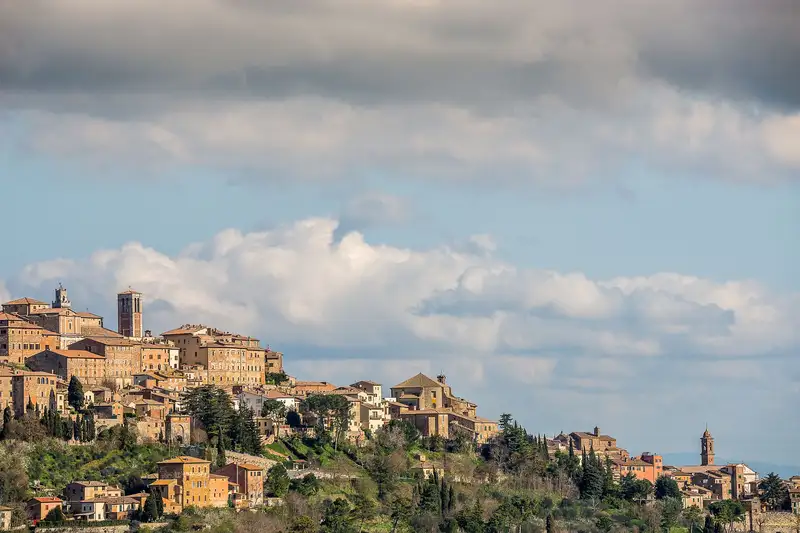
But I've also run it the other way, and for certain groups it works better. If the point of the offsite is deep strategic work, you want the quiet first and the stimulation second. Put the hard conversations in a library at Palazzo Seneca in Norcia, where there's nothing to distract anyone from the agenda, then release the group into Rome for the final two nights as a kind of decompression and reward. The order isn't a formality. It's a decision about when you want people sharp and when you want them loose.
This is the same sequencing problem covered in more detail in Crafting engaging agendas for productive corporate retreats, which argues that most agendas fail before anyone boards a plane because the structure gets built around flight times instead of the actual work the group needs to do. The city-to-countryside order is the geographic version of that same mistake.
The transfer: trains, vans, and the myth of the scenic drive
Everyone wants the scenic drive through Umbria. The Trenitalia regional line from Roma Termini to Spoleto takes about ninety minutes and runs through genuinely pretty country past Narni and Terni, and it's a fine way to move a smaller group of ten or fifteen people without logistics headaches. For forty, it stops being romantic fast. You're now coordinating platform assembly at Termini, luggage that doesn't fit regional train racks, and a second transfer by van from the Spoleto station to wherever the group is staying, because almost no retreat property in Umbria sits near a train station.
For groups over twenty, I default to private coach or a mixed fleet of Mercedes vans, departing Rome by 9am to beat the worst of the ring road traffic around the Grande Raccordo Anulare. The drive north on the A1 toward Orte, then east toward Terni, takes roughly two hours to two and a half depending on where in Umbria you land. Build in a stop. Orvieto sits almost exactly at the midpoint, its cathedral visible from the highway long before you reach the exit, and a ninety-minute break there turns a transfer into a half-day excursion instead of dead travel time. I've used this stop to solve a problem nobody mentions out loud: executives hate feeling like cargo. A planned pause with a reason behind it changes how the whole transfer feels, even if the total time in vehicles is the same.
Whatever you choose, test the route with the actual vehicles before the group arrives. Umbria's hill towns were built for mules and Fiats, not sixteen-seat vans, and GPS systems routinely send larger vehicles down roads they cannot physically navigate. ENIT's guidance for meeting planners working in smaller Italian regions flags exactly this kind of access mismatch between urban-rated transport fleets and rural venue roads, and it's worth a call to the Umbria tourism office before you sign a transport contract rather than after.
Vendor handoffs: where Rome's team stops and Umbria's starts
A Rome-based DMC knows Rome. It knows which restaurant near Campo de' Fiori can seat forty without three hours' notice, which guide speaks the right languages, which hotel concierge will fix a last-minute problem without being asked twice. That same company, more often than you'd think, has thin relationships in Umbria. The region runs on a different economy of small operators: family-run agriturismi, a handful of excellent private chefs around Montefalco and Bevagna, drivers who know the back roads into Assisi that avoid the pilgrim traffic.
The mistake I see most often is treating this as one vendor relationship instead of two. It isn't. Build separate scopes of work for the Rome leg and the Umbria leg, with a clear handoff point defined in writing, usually the moment the group leaves the city hotel. Ask both vendors who is responsible for the transfer itself, because "in-between" is exactly where responsibility quietly disappears and where things like missing luggage or a van that never got confirmed tend to surface. I've found it pays to have a single point person, often my own team, physically present at the handoff rather than trusting it to a phone call between two vendors who have never met.
Cross-referencing which vendor covers which need, for forty people with dietary requirements, mobility needs, and arrival times split across two cities, used to mean a planner buried in spreadsheets at midnight. The spreadsheet shuffle used to eat hours. Now there are tools that let me rebuild a vendor plan in minutes when a flight gets cancelled or a venue falls through two weeks out.
What belongs in Rome, and what belongs in Umbria
The content of the offsite should follow the geography, not fight it. Rome is built for anything that benefits from density and stimulus: opening keynotes, panel discussions, client-facing dinners, the kind of networking that thrives when there's a city outside the window reminding everyone why they do business internationally in the first place. A private evening at the Museo Nazionale Romano or a dinner in a converted convent near Trastevere does something a conference room never will for group energy on night one.
Umbria is built for the opposite work: small-group strategy sessions, one-on-ones between executives who never get quiet time together, workshops that need three hours uninterrupted rather than ninety minutes between sessions. There's research from McKinsey Insights on how physical distance from daily operations affects strategic thinking, though honestly most planners know this from watching rooms: people talk differently when the phone signal is weaker and the view is a vineyard instead of a parking structure. A strategy session run in a stone-walled room outside Montefalco produces a markedly different kind of conversation than the same session in a Rome conference hotel, and not because the material changes. The room changes who's willing to speak up, words that wouldn't surface with a city outside the window.
I've also seen groups try to cram too much into the Umbria leg because it feels like the "real" part of the trip and Rome feels like a formality. Resist that. A burnout-prevention offsite built around slow hill towns and long meals, the kind that helps teams recover, depends on leaving large stretches of the schedule genuinely open. If you pack Umbria the way you'd pack a Rome conference day, you've just moved the burnout somewhere prettier.
The changeover nobody plans for: luggage, laundry, and lost time
Here's the part that ruins more multi-city offsites than bad weather ever does. A group checking out of a Rome hotel at 9am, with bags collected by housekeeping and loaded by porters, arrives in Umbria expecting the same system. Most countryside properties don't have twelve porters standing by. Palazzo Seneca has four. Castello di Reschio, for all its polish, has a small team that needs real lead time to turn over forty rooms.
Send room assignments to the receiving property a week ahead, not the day of. Confirm who handles bag tags, because a mismatched system between two hotels means bags sitting in a lobby for three hours while someone sorts out whose name matches which suitcase. And build slack into the first afternoon in Umbria. Don't schedule a session for 2pm if the group arrives at 1:30 with rooms not yet ready. I plan a standing lunch, something unhurried on a terrace, specifically to absorb this gap, because it will happen whether you plan for it or not.
A sample four-day arc
Day one: arrival in Rome, light welcome dinner near the hotel, no agenda beyond resetting clocks. Day two: full strategy day in a private meeting space, evening keynote and dinner with a city view, all designed to make Rome work as your asset rather than your backdrop. Day three morning: checkout, coach transfer with the Orvieto stop, arrival in Umbria by early afternoon, open evening. Day four: small-group workshops in the morning, free afternoon for a cooking class in Bevagna or a walk into Assisi, closing dinner that night with no agenda attached to it at all. Four days, two very distinct registers, one connecting thread built into the transfer itself rather than treated as dead time between the two.
Budget realities of running two legs instead of one
Two-city offsites cost more than single-site ones, and the premium isn't where people expect it. It's not the hotels. It's the duplicated vendor relationships, the second set of ground transport contracts, and the transfer day itself, which is a full day of spend producing no formal programming. Most offsite budgets go sideways before a single flight is booked, usually because the sequence of decisions is backward. The same backward logic applies here, double it, once for Rome and once for Umbria, and the transfer day has to be budgeted as its own line item with its own contingency, not folded quietly into "transportation" and forgotten.
A rough rule I use: budget the transfer day at roughly 15 percent of total ground costs for a forty-person group, covering vehicles, the Orvieto stop, contingency for a vehicle breakdown or a road closure, and a driver gratuity structure that covers two separate transport companies rather than one. It sounds high until the first time a bridge closure on the A1 forces a forty-minute reroute and you're glad the budget had room in it.
The thing the schedule can't capture
Last spring, somewhere between the second and third day of a trip like this, I watched a CFO who'd spent the Rome leg checking his phone between every session sit on a low stone wall outside Montefalco for twenty minutes with no phone in his hand at all, just watching a farmer move a flock of sheep across a field below the property. Nobody scheduled that. It happened because the drive into Umbria had already done its work on him, and the agenda finally had room to let it.
For those who prefer a specialist, Culture Discovery Vacations designs custom tours that integrate diverse experiences into a cohesive journey.
That's the real case for running Rome and Umbria together instead of picking one. The city gives a group its reason for being there. The countryside gives them room to actually hear each other. Get the transfer right, and the gap between the two cities stops being a logistics problem and starts being the part of the trip people remember.

Comments (0)
No comments yet. Be the first!