
Executive offsites are expensive. That's simply the reality. But the question isn't whether you can afford to run one... it's whether you can afford to run a bad one.
A poorly planned offsite that wastes three days of your senior leadership team's time, produces no decisions, and leaves everyone vaguely resentful? That's the budget disaster. The hotel bill is almost beside the point.
This guide is for the people who have to actually build the executive offsite budget, defend it to a CFO, and then make it work in practice. Whether you're planning something intimate for eight C-suite leaders or a broader leadership gathering of fifty, the principles here apply. Let's get into the numbers.
Why Most Executive Offsite Budgets Fall Apart
Most budget problems happen before a single dollar gets spent. They happen in the planning phase, when assumptions go unchallenged and scope creeps in quietly.
Here's what usually goes wrong. Someone gets excited about a venue, locks it in, and then tries to fit everything else around the remaining budget. Or the opposite: a budget gets set arbitrarily, with no clear understanding of what the offsite needs to accomplish, and then the planning team spends weeks trying to make an underfunded program look respectable.
Neither approach works.
The best executive offsite budgets start with purpose. What does this offsite need to produce? A strategic plan? A cultural reset? A decision on a major acquisition? The answer to that question should shape every spending choice you make.
Building the Budget From Scratch: A Framework That Actually Works
Start With Your Non-Negotiables
Before you look at a single venue brochure or caterer menu, write down the things that aren't flexible. These are your fixed costs, the commitments that exist regardless of where you go or what you do.
For most executive offsites, this includes facilitator fees (if you're bringing in external help), any specialized consultants, travel for attendees coming from out of town, and the basic logistical infrastructure of the event itself.
Get these numbers on paper first. Everything else gets built around them.
The Four Spending Buckets
Think of your executive offsite budget in four categories. Venue and accommodations. Food and events. Content and facilitation. Logistics and contingency.
Most planners overspend in the first two buckets and underspend in the third. This is a mistake. A beautiful venue with a mediocre facilitator is just an expensive hotel stay. The content and facilitation bucket (the thinking, the structure, the process design) is where your ROI actually lives.
Venue and Accommodations: 35-45% of total budget
This is usually the biggest line item, and it's where people get emotionally attached. Yes, the Amangiri in Utah is spectacular. Yes, a private villa in Umbria will create a very different conversation than a conference center in suburban New Jersey. But venue choice has to match the purpose of the offsite, not just the aspirations of the planning committee.
A few specific considerations: room block commitments can eat your contingency if attendance shifts. Always negotiate a release clause. If you're booking somewhere like the Auberge du Soleil in Napa for a September offsite, expect a 90-day cancellation window minimum, and budget for attrition clauses that could cost you 10-15% of your room block if headcount drops.
Food and Experience: 20-30% of total budget
Food matters more than people admit. A working lunch that's actually good keeps energy up, it signals care, and it tells your senior leaders that this time together is worth investing in. The events bucket also includes any off-site activities, dinners, entertainment, or team moments you're building into the program.
Don't confuse "impressive" with "expensive" here. A private dinner at a local family-run restaurant in Healdsburg, California can be more memorable than a catered ballroom dinner that cost three times as much.
Content and Facilitation: 20-25% of total budget
Underinvested. Almost always.
A strong external facilitator for a two-day senior leadership offsite in 2024 typically runs between $8,000 and $25,000 for their fees alone, depending on their profile and the complexity of the work. That's before materials, prep calls, and any post-offsite synthesis they provide. If you're running a strategy session for your top fifteen executives and you've budgeted $3,000 for facilitation... something's wrong.
Pre-read materials, workbooks, digital collaboration tools, speakers, and any intellectual content that anchors the agenda all live in this bucket too.
Logistics and Contingency: 10-15% of total budget
Ground transportation, A/V equipment, printing, name badges, last-minute supply runs: this stuff adds up. Keep 8-10% of your total budget in a contingency reserve. Not because you're pessimistic. Because you're realistic.
Per-Person Cost Benchmarks: What You Should Actually Expect to Spend
This is the question everyone asks and nobody wants to answer directly. Fine. Here are real numbers.
For a domestic U.S. executive offsite with 10-20 senior leaders, two to three nights at a quality property, and a properly structured agenda:
- Budget tier: $1,200, $2,000 per person per day
- Mid-range: $2,000, $4,000 per person per day
- Premium: $4,000, $8,000+ per person per day
These numbers include everything: venue, food, facilitation, activities, and basic transportation. They don't include flights for attendees traveling from other cities, which can add $500, $2,500 per person depending on origin points.
International offsites shift these numbers significantly. A leadership retreat in the Dolomites or at a private estate in Tuscany involves more complex logistics, longer travel windows, and often requires additional days built into the program. Budget accordingly. The per-day costs might be similar or even lower (European venues can offer surprisingly strong value), but the total investment goes up because the program is longer.
The ROI Conversation: How to Justify the Budget
Your CFO is going to ask. You should have an answer ready before they do.
The ROI of an executive offsite isn't always quantifiable in the traditional sense, but that doesn't mean you can't make the case clearly. Here's how to frame it.
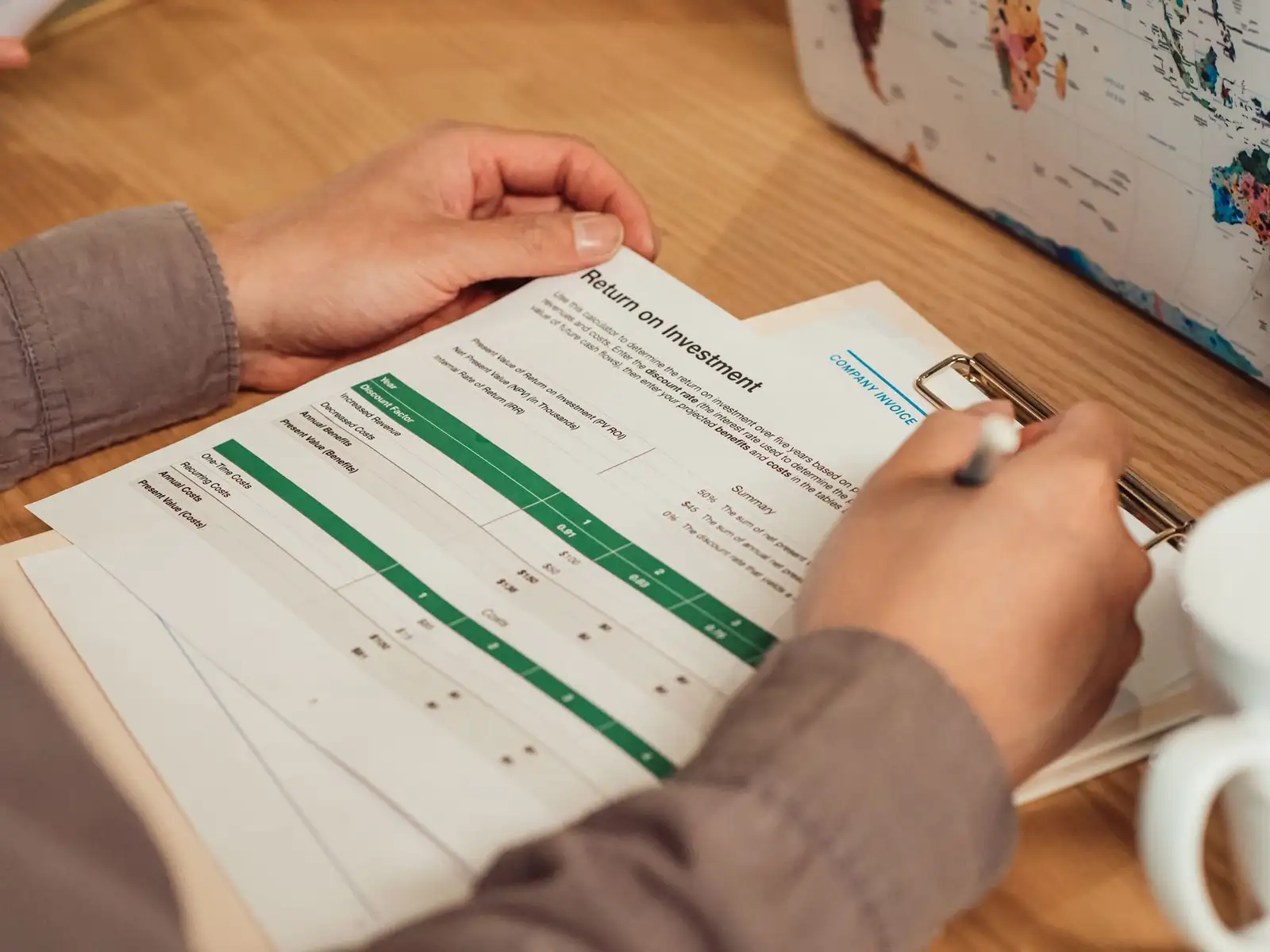
Calculate the cost of the room. Add up the fully-loaded compensation cost (salary, benefits, employer taxes) of every person attending the offsite. Divide by 250 working days. Multiply by the number of days they'll be at the offsite. That's the implicit cost of the time, before you spend a dollar on venue or food.
For a team of fifteen executives averaging $400,000 in total compensation, a three-day offsite represents roughly $72,000 in time cost alone. Against that number, a $150,000 event budget looks different than it does in isolation.
Tie spending to outcomes. The strongest ROI case you can make is a specific one. If this offsite is designed to finalize a go-to-market strategy for Q1, what's the revenue at stake if that strategy is delayed by another quarter? If it's a cultural alignment session following a merger, what's the estimated cost of misalignment in turnover and productivity? Make the connection explicit.
Track what actually happens afterward. Build in a 90-day follow-up mechanism. What decisions were made at the offsite? Which ones got implemented? What changed as a result? This data is invaluable for justifying the next offsite budget, and for continuously improving the design.
Where to Spend More Than You Think You Should
Some areas of the executive offsite budget are worth overspending on. Here's where.
Facilitator quality. The difference between a mediocre facilitator and a great one isn't style. It's whether your senior leaders actually get to the hard conversations, whether the agenda holds under pressure, and whether the output of the two days is something you can use. Spend here.
Single-occupancy rooms. Shared accommodations at an executive offsite is a false economy. Senior leaders value privacy, and making them share a room (or even a suite) creates resentment that poisons the rest of the program. Every attendee gets their own room. Non-negotiable.
The first dinner. The opening meal of an offsite sets the tone for everything that follows. It's when people relax, when walls come down, when the real conversations start. A memorable first dinner (whether that's a private chef in a wine cave at Beringer Vineyards in Napa or a long table dinner under the stars in Marfa, Texas) pays dividends across the entire program. Worth it.
Pre-work and materials. Sending your senior leaders into a strategy session without any preparation is like asking them to play chess without knowing the board. Well-designed pre-reads, surveys, or diagnostic tools that arrive two weeks before the offsite dramatically improve the quality of conversation when people are actually in the room.
Where You Can Cut Without Killing the Experience
Not everything needs to be premium. Here's where you can pull back without losing impact.
Fancy swag. Nobody needs another branded water bottle or tote bag. If you're going to do gifts, make them thoughtful and local, a small-batch wine from a producer near the venue, a book that's genuinely relevant to the work you're doing. But generic branded merchandise? Cut it.
Overprogrammed evenings. After a full day of strategic work, executives need downtime. A structured evening activity every single night of the offsite is too much. One free evening where people can self-organize is cheaper and often where the best informal conversations happen.
Elaborate A/V setups. Unless your offsite involves presentations to a large group, most of the A/V budget can be trimmed significantly. A good portable projector, a solid Bluetooth speaker, and a few flip charts will serve most executive offsite formats better than a $15,000 production setup.
Premium spirits at the bar. Keep the wine good. The top-shelf scotch selection is irrelevant.
Venue Negotiation: Money Left on the Table
Most planners don't negotiate hard enough. Venues have more flexibility than they show in their initial proposals, and knowing where to push can save you 15-25% of your venue budget.
Ask about shoulder season rates. A property that costs $800 per room per night in October might be $550 in January or February. The experience is often equally good (sometimes better, without the crowds). The Ventana Big Sur in California, for example, has significantly different rate structures depending on the time of year.
Push on food and beverage minimums. If the venue has a F&B minimum that you know you'll exceed, ask for a reduction in meeting room rental fees in exchange. These are often bundled in ways that benefit the venue, and they're often separable.
Negotiate on attrition clauses. The standard attrition clause (which penalizes you if your room block attendance drops below a threshold, typically 80-90%) is negotiable. Ask for a lower threshold, or for the ability to reduce your block up to 60 days before the event without penalty.
Get complimentary rooms in writing. Most properties will offer one complimentary room for every 25-30 paid rooms. Make sure this is in the contract, not in a verbal commitment from the sales rep.
The Hidden Costs Nobody Budgets For
A few line items that show up regularly in executive offsite post-mortems, usually as unwelcome surprises.
Resort fees. Many properties charge daily resort fees of $40-$100 per room that aren't included in the quoted room rate. Always ask.
Internet bandwidth fees. Some venues charge separately for high-bandwidth internet access in meeting rooms. This can add $500-$2,000 to your event cost depending on the property.
Gratuity. Food and beverage gratuity of 20-24% is standard at most properties, and it's often not visible in the initial proposal. On a $30,000 F&B budget, that's $6,000-$7,200 you need to account for.
Overtime charges. If your meeting runs long and requires staff to stay beyond contracted hours, expect additional charges. Build buffer time into your agenda.
Concession fees. Some venues charge a fee for bringing in outside vendors (your own facilitator, a preferred caterer, an external speaker). Ask about this upfront.
Building an Offsite Culture That Doesn't Require Extravagance
Here's a perspective shift that can transform how you think about executive offsite budgeting. The most effective offsites aren't necessarily the most expensive ones. They're the ones where the environment, the agenda, and the people are in genuine alignment.
There's a reason that some of the most productive leadership retreats happen at relatively modest properties with excellent facilitation, while some of the most expensive ones produce nothing actionable. The money doesn't do the work. The design does.
When you understand how environment shapes conversation (how a shared meal slows things down in the right way, how a walk outside changes the quality of a difficult dialogue) you start making spending decisions with more intention. If you're curious about the subtle dynamics of shared meals and what they actually do for a group, this piece on how people eat together in Italy gets at something real about pace, presence, and what happens when people stop rushing through food together. It's not about Italy specifically... it's about what slowing down at a table actually produces.
That insight is worth carrying into your offsite design. Budget for a long dinner. Budget for a meal that doesn't have an agenda attached to it. The ROI is harder to measure, but it's there.
A Sample Budget Breakdown: 15-Person Executive Offsite, 2.5 Days
Here's what a realistic executive offsite budget looks like for a mid-sized senior leadership team at a quality domestic property.
Assumptions: 15 attendees, 2 nights / 2.5 working days, domestic property in wine country (Sonoma, California), October dates.
| Category | Line Item | Estimated Cost |
|---|---|---|
| Venue | Meeting room rental (2 days) | $4,000 |
| Accommodations | 15 rooms x 2 nights x $450/night | $13,500 |
| Food & Beverage | All meals + breaks + 2 dinners | $18,000 |
| F&B Gratuity | 22% on F&B | $3,960 |
| Facilitation | External facilitator (2 days + prep) | $18,000 |
| Pre-work materials | Surveys, workbooks, printing | $2,500 |
| Activities | One guided experience (half day) | $3,000 |
| Ground transportation | Shuttles from SFO | $2,200 |
| A/V and supplies | Basic setup, flip charts, etc. | $1,500 |
| Contingency (10%) | Reserve | $6,700 |
| Total | ~$73,360 | |
| Per person | ~$4,890 |
This doesn't include individual flights. Add $600-$1,500 per person depending on origin cities.
Is this budget right for every organization? No. But it's a realistic starting point for a properly resourced offsite that takes the time seriously.
Getting Leadership Buy-In Before You Start Spending
One more thing. Before you build a detailed executive offsite budget, get alignment on three things from the senior sponsor: the purpose of the offsite, the success criteria, and the approximate investment range they have in mind.
This sounds obvious. It often doesn't happen.
You don't want to spend three weeks building a $200,000 budget proposal for an offsite that the CEO was imagining as a $50,000 event. And you don't want to underbuild a program that actually needs to address a major organizational inflection point because you were anchoring to last year's spend.
Have the conversation early. Get it documented. Then build the budget that actually serves the goal.
The executive offsite budget isn't the point. The outcome is the point. Every dollar you spend should be in service of that.



Comments (0)
No comments yet. Be the first!