
An executive offsite is not a retreat, and it is not a reward. It is a scheduled break from the calendar, expensive in flights and lost billable hours, that exists to produce a small number of decisions the group could not reach over video calls squeezed between other meetings. If that sounds narrowly specific for good readon. Offsites that try to do everything at once, morale and strategy and team building and next year's roadmap, tend to do none of it well, and the flight home gets spent wondering what the two days really changed, if anything.
Knowing how to run an effective executive offsite starts before anyone books a flight, with a decision about why the group is leaving the building at all.
I've been planning these for years, and loooking at what works and what does not distills to a few key rules. Herre is the short version:
Decide what the offsite needs to produce
Before anyone books a flight, the person calling the offsite, whether that's the CEO, a chief of staff, or the head of HR, should write down two or three key decisions the group needs to leave with. The more specific, the better.
Resist the urge to think about themes or topics topics until this is done.
For example, a theme like "alignment on growth strategy" can absorb six hours of talking and produce nothing tangible. Instead, go with "we need to produce a final decision if we are going to build that new capability or outsource it."
Then make certain there is a clear owner for the outcome, then write the decisions down, share them with the group two weeks ahead, and build the whole agenda around getting to those decisions rather than around a list of topics that sound important.
Choosing a destination and venue that supports focused work
The choice of destination gets treated like a perk decision. It's a work decision. A group that flies to Rome for six hours of strategy sessions and three restaurant dinners hasn't run an offsite, it's run a trip with an agenda.
Distance matters, but only within reason, because the point of leaving the office is to change the physical cues that keep people in operational mode, not to prove commitment because you are suffering jet lag together when it is over.
This last one is more or less a confession on our part, given that we are all about offsites in places like Rome, Tuscany, Porto, Madrid, etc. Sure, we would love to do yuour offsite, but we have no insterest in doing one that is unproductive.
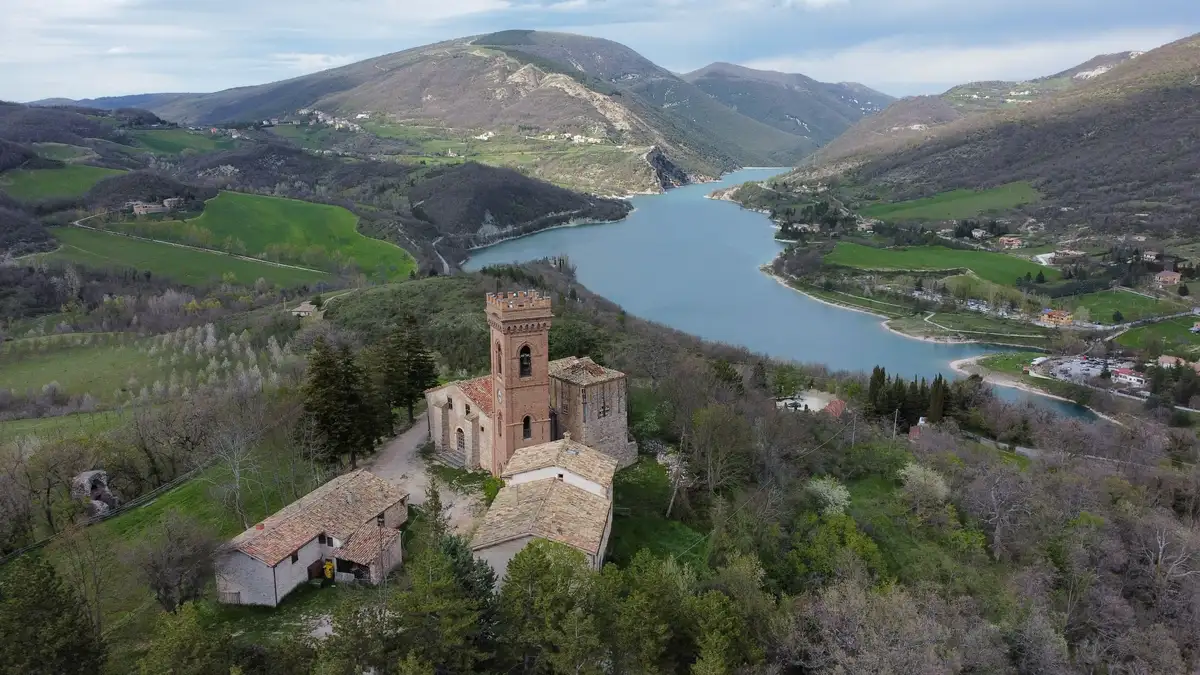
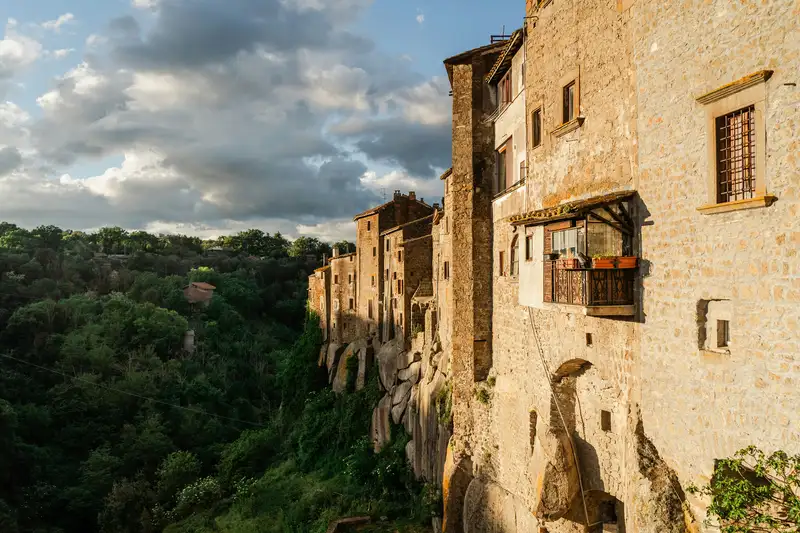
For smaller groups, the venue that works best is usually smaller than the group expects: a single house or a small hotel with one meeting room, not a conference center built for eighty. Umbria and the hill towns north of Rome host a fair number of these groups because a town like Soriano nel Cimino gives an executive team a walkable center, a handful of restaurants that can handle a private dinner, and almost nothing else to do after 9pm. That last part is a feature, not a gap. An evening walk along the old streets, the kind described in Evening Passeggiata Along Historic Streets of Soriano nel Cimino, does more for a tired group's second-day energy than a hotel spa ever will.
Groups weighing Italy against other European options can use a simple practical test: can everyone get from the nearest international airport to the venue in under two hours, and is there at least one restaurant nearby that can seat the whole table without splitting the group across two rooms.
I used Soriano as the example, because it is a place where you cannot help but get absorbed by local culture. That meeting space may be a wine cellar, a local villa, or even in a forest under the canopy. The point is to get away from anything that feels even remotely like the office back home or a traditional conference room.
Executive offsite travel management: what people tend to underestimate
Every offsite plan looks fine on paper until the travel details show up. Six executives flying from five cities don't arrive at the same time, and the first afternoon of a three-day offsite disappears fast if half the group is stuck in immigration at Fiumicino while the other half waits at the destination. The fix is simple: pick a single arrival window, usually a four-hour band on the afternoon before the offsite starts, and book every flight against it, even if that means paying more for a direct route instead of a cheaper connection through Frankfurt.
Transfers should be arranged door to door, not left to taxi apps at an unfamiliar airport. One person, an EA, a chief of staff, or an outside coordinator, needs to own every flight number, transfer time and dietary note in a single document, and everyone else needs to know that person's name before they leave home. Splitting this across three assistants because "everyone's busy" is how a vegetarian ends up served the same veal dish three nights in a row, and how a colleague with a mobility need finds out the venue's only bathroom is up a flight of stone stairs.
Dietary and accessibility needs should be collected once, in writing, at the time flights are booked, not the week before departure. A hill town venue that looks lovely in photos likely has a cobblestone approach, no elevator, and one narrow staircase to the meeting room, details to confirm directly with the property instead of trusting a website.
This is key information we try to get from the people traveling at every stage. We have it on our version of every rooming list and every meeting schedule, because one hiccup here can kill a day.
For a deeper look at executive offsite logistics, see Mastering Logistics and Transportation for Seamless Executive Offsites.
A three-day team offsite agenda that doesn't waste the flight time
A three-day offsite for a leadership team of eight to ten tends to work best on this rhythm. Everyone arrives the afternoon before day one, ideally by 4 or 5pm local time, giving the group a shared dinner that first night instead of a working session. The instinct to protect a long, unhurried group meal shows up everywhere in Italian life too, in the three-hour Sunday lunches described in Sunday Family Lunch Traditions in Central Italy's Villages, where nobody treats the time at the table as time lost.
Day one starts late by office standards, 9am instead of 7:30, because people traveled the day before and a group running on jet lag makes bad decisions. The morning is the heaviest lift: the first of the two or three decisions the group came to make, worked through with pre-read material everyone has actually read (send it a week ahead, not the night before). Lunch is kept short and on-site. The afternoon covers the second decision, with a hard stop by 5pm. Evenings are for a shared dinner off-site, somewhere the group wouldn't otherwise choose to eat, a family-run place instead of the hotel restaurant will help people decompress more than just about anything.
Day two is no business. It begins with a lazy morning and some alone time for everyone, then moves into some shared experiences. It can be pruning vines at the vineyard, making a huge lunch that will be shared, or any of doezens of other things. This sounds like team building. It is, soirt of. Mostly it is space to digest what was discussed yesterday, and for those side conversations to happen in a relaxed space where the brain as slowed down to focus. Think of it as filtering through yesterday's decisions and polishing them.
Day three mornings handle the distilled decisions and a third decision if there is one, plus a session, no more than ninety minutes, on what gets communicated to the rest of the company and by whom. The early afternoon is left open, three or four hours with no agenda. That open block isn't dead time on the agenda. More side conversations that didn't happen yet, and people who've been sitting in a room together really stop performing and start talking.
A four-day agenda, when there's more to resolve
A fourth day changes the whole offsite, not just its length. With four days, day one can be lighter, arrival plus a single easy session, context-setting rather than decisions, followed by dinner. Day two becomes the working core: two full sessions, morning and afternoon, tackling the hardest of the two or three decisions, the one everyone privately worried the trip wouldn't resolve. Day three morning finishes the remaining decisions and moves into the communication plan; Day for to distill, the decide how to communicate decions, with the afternoon for departures.
The extra day also buys more room outside meetings. Groups staying near Soriano nel Cimino sometimes build a late-morning break around the region's hazelnut harvest, walking the groves during the season described in Hazelnut Harvest Customs in Soriano's Countryside, before heading back for the afternoon session. It sounds like a small thing. It changes how afternoon sessions go, because people who spent an hour outside talking about nothing come back and argue less defensively than they did the day before.
To adapt either outline for your own group, the offsite agenda template in Crafting the Perfect Agenda for Your Executive Offsite: Templates and Best Practices is a good place to start.
Facilitation and capturing decisions
The person running the room should not be the person whose idea is on trial. A CEO facilitating a session about whether to restructure their own direct reports will, without meaning to, steer the conversation toward the answer they already prefer.
Bringing in a facilitator, whether an internal operations leader who isn't part of the decision or an outside professional, changes what people are willing to say out loud. We've done it both ways - someone from the complany that facilitates, or someone from our team. What matters most is that the person is not part of the group dynamic.
Whatever gets decided needs to be written down in the room, in language specific enough that anyone reading it three months later understands what was agreed and why. "We agreed to explore expansion into new markets" is not a decision. "We will open a Prague office by Q3, funded from the existing EMEA budget, with Sarah owning the hiring plan" is. A single document, shared before everyone leaves, with an owner's name attached to each line, does more to make an offsite worth it than any part of the agenda itself.
Follow-up: what happens after everyone flies home
The offsite doesn't end when the last flight takes off. Every decision document needs a follow-up date, thirty days out usually, where the owner reports back on progress against what was agreed. Skipping this step is the most common way offsites lose credibility with the rest of the company: people hear a decision was made, watch the group return sunburned and relaxed, and then see nothing visibly change for two months.
Communication to the wider team should happen within a week, not as a slide deck recap of the agenda but as a short message covering what was decided and what it means for people who weren't in the room. Vague debriefs, "great alignment, exciting things ahead," read as a signal that nothing real got decided, whether or not that's true.
Running it in-house, or bringing in a specialist operator
Many companies run every offsite in-house, using an EA or chief of staff to book flights, secure a venue and manage the details on-site. For a single trip to a city with direct flights and familiar infrastructure, that's manageable. It gets harder for groups flying in from four or five countries into a smaller European destination, where the venue has no events team, the nearest restaurant needs advance notice for a private group, and the transfer company only speaks Italian or Portuguese.
And to be honest, if the venue has an events team, you are usually at "just another events venue".
Specialist operators like us who handle small executive groups in Europe exist for exactly that gap. They don't replace the decision about purpose or agenda, that has to come from inside the company, but they take on the travel coordination, arrival windows, transfers, dietary logistics, and the local knowledge of which hill town restaurant can seat twelve people without three hours' notice. Whether the added cost makes sense depends mostly on group size and destination complexity: a domestic offsite for six people rarely needs it, a ten-person international group flying into rural Umbria or Portugal's Douro valley usually benefits from a local specialist handling the logistics end to end.
For those who prefer a specialist, Culture Discovery Vacations is one operator that specializes in executive offsites and handles this kind of travel and on-the-ground logistics from start to finish.
We don;t just organize and plan the trip and logistics. We are not an agency or incentive house. We are the whole chain. We facilitate and evaluate. We help make sure those dietary and mobility issues are handled. We help assure our customer comes in with a clear agenda and leaves with a clear path forward. We are the ones on the ground and in the room to make sure your team can focus entirely on the thing that matters.
The clearest test isn't cost. It's this: after everyone lands back home, does someone still know what was decided, who owns it, and when it's due? If yes, the trip earned its place on the calendar. If not, no venue, however striking, fixes that.



Comments (0)
No comments yet. Be the first!