
Key Takeaways
- Resorts optimize for scale and predictability. Villas optimize for depth and attention. Your choice should follow your goal, not your comfort level.
- For groups under 25, a private villa buyout often costs less per person than a comparable five-star resort block, once you account for food, staff, and exclusivity fees.
- Executive teams working through trust deficits or major strategic decisions tend to benefit more from the forced proximity of a villa than the polished distance of a resort.
- Gallup's research on workplace engagement consistently ties manager access and informal interaction to team performance, and venue choice either supports or undermines that dynamic.
- The wrong venue doesn't ruin an offsite outright. It just quietly limits what the offsite could have accomplished.
Most executive assistants booking their first company offsite default to the resort. It's the safe choice, the one nobody questions in a budget meeting. Fair enough. But I've watched enough of these programs unfold, in Tuscany, in the Algarve, in Napa, to say this plainly: the resort is often the wrong answer for a group of 12 to 30 people trying to actually change how they work together.
That's not a knock on resorts. It's a claim about fit.

Two Very Different Environments, Two Very Different Outcomes
A resort is designed to serve many groups at once, even if your block feels exclusive. There's a wedding in the ballroom next door, a conference wrapping up in the east wing, and a pool full of leisure travelers who have nothing to do with your leadership team. The staff is professional, the amenities are excellent, and the whole operation runs on systems built for volume.
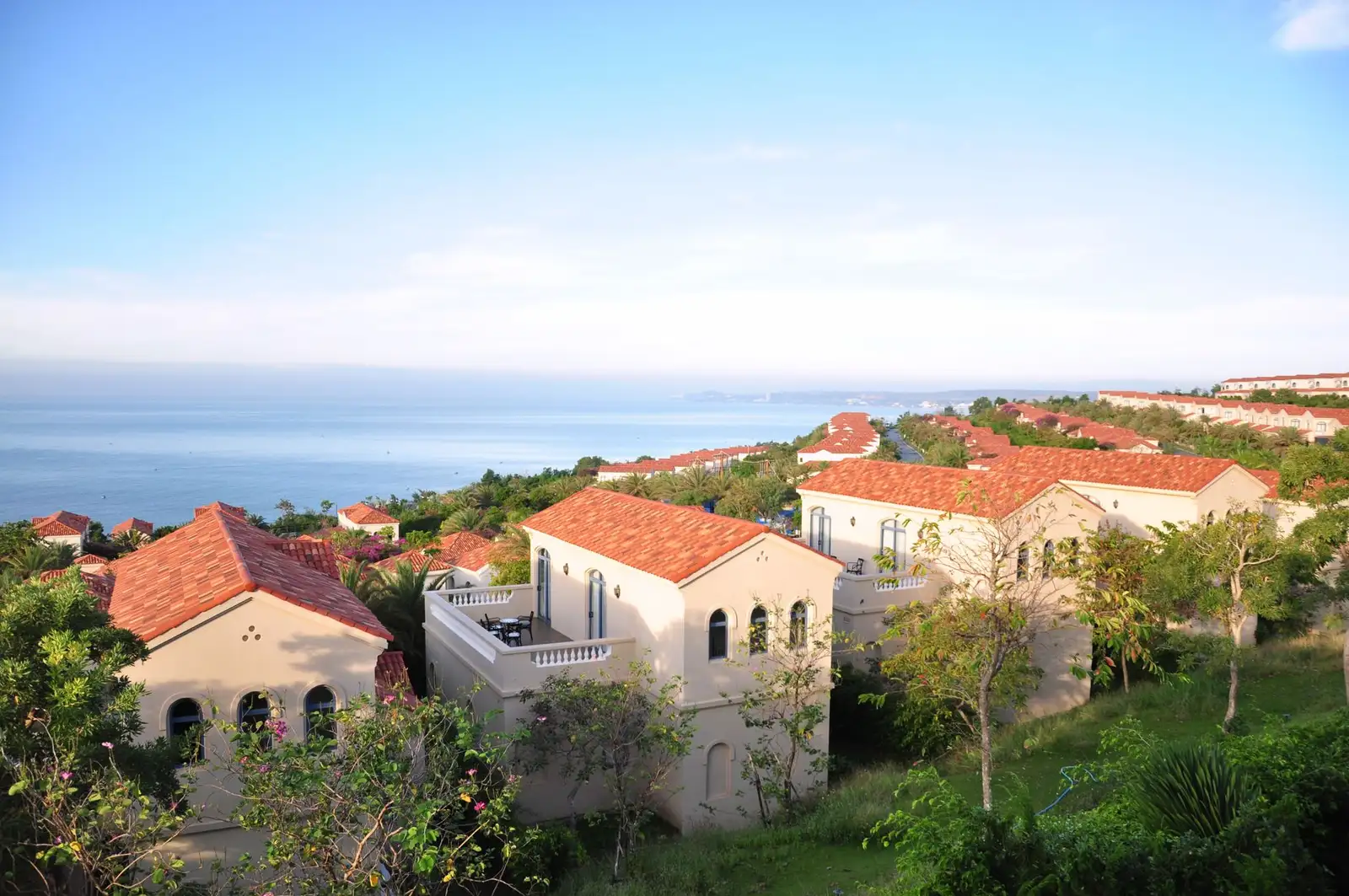
A private villa flips that entirely. It's just your group. The kitchen cooks for your team and nobody else. The pool, the terrace, the long dinner table under the pergola: all of it belongs to your 20 people for the duration of the stay. There's no lobby full of strangers, no competing events, no sense that you're one booking among many.
That difference sounds small until you watch it play out. At a Rosewood or a Four Seasons, executives tend to retreat to their rooms between sessions. Habit, mostly. Hotel life trains people to disappear when there's nothing scheduled. In a villa, there's nowhere to disappear to that isn't shared space. People end up on the terrace with a glass of wine at 4pm instead of in their room checking email. That's not a soft benefit. It's the entire point of getting a leadership team out of the office in the first place.
Deloitte's research on organizational trust has pointed to informal interaction, not structured programming, as one of the stronger predictors of team cohesion after offsite investment (see Deloitte Insights on workforce trends). A villa engineers that informal interaction by default. A resort requires you to fight for it against the property's own design.
When the Resort Is Actually Right
I don't want to overstate the case here, because resorts absolutely have their place.
If your group is 40 or more, a villa buyout becomes logistically strained (bathrooms, bedroom counts, and kitchen capacity all hit ceilings fast). If your offsite requires serious AV infrastructure, breakout rooms, and a projector that doesn't rely on someone's laptop propped on a wine crate, a resort's meeting facilities will simply outperform a converted living room. And if this trip is explicitly a reward, a five-star name still carries weight with people who've been grinding for two years toward a bonus target. Amanyara in Turks and Caicos or Castiglion del Bosco in Montalcino both deliver that kind of unmistakable luxury executive retreat signal. Nobody mistakes it for a budget trip.
Resorts also remove risk. Cancellation policies are clearer, service standards are consistent, and if something breaks (the AC, the Wi-Fi, the chef), there's a full staff and a general manager to fix it immediately. A villa with a private chef and three staff members doesn't have that redundancy. If the chef gets sick the day before your welcome dinner, you're troubleshooting in real time.
So the honest answer is: it depends on what you're optimizing for.
The Comparison
| Dimension | Private Villa | Resort |
|---|---|---|
| Ideal group size | 10-30 | 25-100+ |
| Privacy | Total, exclusive use | Shared property, partial exclusivity |
| Cost structure | Flat buyout, often cheaper per person under 25 guests | Per-room rate plus event fees, scales with group |
| Informal interaction | High, built into the layout | Low unless deliberately engineered |
| Meeting infrastructure | Improvised, limited AV | Purpose-built, reliable |
| Food program | Private chef, one seating, flexible timing | Restaurant service, multiple outlets, set hours |
| Risk if something fails | Higher, smaller staff redundancy | Lower, full property support |
| Reward/status signal | Understated but memorable | Immediately recognizable |
| Best for | Trust-building, strategy sessions, tenure milestones | Large incentive trips, formal leadership retreats, mixed programming |
What the Research Actually Supports
Harvard Business Review has covered the shift among companies moving away from generic conference-style retreats toward smaller, more immersive formats, arguing that the format of a leadership retreat matters as much as its agenda (HBR's coverage of executive retreat design). That tracks with what I've seen on the ground. A company offsite built around eight hours of conference-room slides, regardless of how nice the resort is, produces roughly the same output as doing it at headquarters. The venue becomes wallpaper.
McKinsey's work on team effectiveness makes a related point: high-performing teams report significantly more unstructured collaboration time than average teams, and that unstructured time is where trust and shared understanding actually form (McKinsey's research on team performance). A villa, almost by accident, forces more unstructured time than a resort does. There's simply less to retreat into.
None of this means resorts can't work. It means the physical structure of the property either supports the outcome you want or works quietly against it, and most planners never ask the question directly.
Where This Plays Out: Two Real Scenarios
Picture a 22-person leadership team from a mid-size logistics company, six months post-merger, still functioning as two separate cultures in one org chart. Put them in a resort in Scottsdale and they'll sit at their old sub-team tables at dinner, retreat to their rooms after sessions, and leave having had a pleasant week that changed nothing about how they actually work together.
Put that same group in a villa outside Lucca, Italy: one long table, one kitchen, no separate wings to disappear to. Dinner runs three hours because nobody's rushing off anywhere. By day three, people who hadn't spoken directly in six months are arguing about the right way to open a bottle of Vermentino. That's not a metaphor for anything grand. It's just proximity doing what proximity does.
Now picture a different scenario: a sales organization's top 35 performers earning an incentive trip after a record year. This group doesn't need forced intimacy. They need to feel like winners. A resort like the Belmond Hotel Caruso on the Amalfi coast, with its cliffside pool and formal service, delivers exactly the signal this group is looking for. Trying to cram 35 people and their partners into a villa would feel cramped and, frankly, a little cheap for what's supposed to be a reward.
Same country, wildly different venue call, because the goal wasn't the same.
The Food Question Nobody Budgets For Properly
This deserves more attention than it usually gets in planning guides.
At a resort, your team eats what's on the restaurant menu, at the times the restaurant is open, alongside other guests. It's fine. It's rarely memorable. At a villa with a private chef, meals become part of the programming itself, not a break from it. I've seen this shift a team's mood more than almost anything else on the itinerary: a long lunch where the chef explains what's on the table, where the wine came from, why the olive oil tastes different from what everyone's used to at home.
If your offsite lands in central Italy, this is worth understanding before you plan the food program around it. The pacing of a real Italian meal, the way conversation is expected to slow down rather than speed up, runs against every instinct a busy executive team brings to the table. There's a good account of how this actually works in the villages around Lake Bolsena in Sunday Family Lunch Traditions in Central Italy's Villages, and it's a useful primer for anyone assuming a "working lunch" translates cleanly into a Tuscan setting. It doesn't, and fighting that rhythm usually loses.
Wine matters here too, more than most planners think. A private cellar tasting isn't just a nice add-on, it's often the moment where the day's formality finally drops. The ritual of it, the way a group settles into a cellar and starts talking differently than they did in the boardroom that morning, is documented well in Wine Cellar Gatherings and Tasting Rituals in the Cimini Area. Worth reading before you assume a tasting is just a tasting.
Budget Realities: Where the Numbers Actually Land
Here's the part that surprises most first-time planners.
A resort quote for 20 people usually looks like a set of individual room rates plus a private dinner fee plus a meeting room rental plus service charges layered on top of all three. It adds up fast, and the total often exceeds what people expect walking in.
A villa buyout, by contrast, is usually one flat number: the property, staffed, for the duration of the stay. Split across 20 people, that number is frequently lower than the equivalent resort package, particularly once you factor in that meals are already included and there's no separate "private event" surcharge, because the whole property is already private.
Where this breaks down is scale. Above roughly 30 people, most villas simply run out of bedrooms, and you're either booking two properties (which reintroduces the fragmentation you were trying to avoid) or shifting to a resort by necessity. Below 30, though, the villa model usually wins on cost, and almost always wins on the depth of experience per dollar spent.
Italy's official tourism resources, through Italia.it's guidance on group and incentive travel, list a range of properties across regions that support exactly this kind of private buyout model, from working wine estates to converted convents, which gives planners a decent starting point for comparison shopping before committing to a resort by default.
The Framework: How to Actually Decide
Skip the vibe-based decision. Score your options across five factors:
Group cohesion need. On a scale of 1 to 5, how urgent is it that this team builds trust or repairs a relationship? High score, lean villa.
Group size. Under 25, villa is viable. Over 30, resort or multi-property villa cluster becomes necessary.
Purpose of the trip. Reward and recognition trips generally favor recognizable resort brands. Strategic planning, succession conversations, and post-merger integration favor the intimacy of a villa.
Meeting infrastructure needs. If the agenda is heavy on formal presentations and breakout sessions, weight this toward resort. If it's mostly discussion-based, a villa's living rooms and terraces handle it fine.
Risk tolerance. If your organization needs guaranteed service standards and can't absorb a hiccup gracefully, resort. If you (or your operator) can troubleshoot on the ground, villa opens up more interesting options.
Score each category 1 to 5, weight the ones that matter most to your specific offsite, and total it up. It's not a perfect science. But it beats picking a venue because the brochure had good lighting.
A Third Option Worth Mentioning
There's a middle path that doesn't get discussed enough: the boutique property that behaves like a villa but has the staff bandwidth of a small resort. Think a twelve-room estate with a dedicated chef, a small event lawn, and enough bedrooms to house 25 people without splitting the group across buildings. Borgo Santo Pietro in the Tuscan countryside near Siena operates in roughly this zone, and it captures a lot of what makes a villa work (privacy, one kitchen, one table) while offering slightly more polish than a pure private rental.
This category tends to be the sweet spot for groups of 15 to 30 who want the intimacy without the operational risk of a fully private villa with a skeleton staff.
For Those Who Prefer a Specialist
Sorting through villa buyouts, resort contracts, and everything in the boutique middle ground is its own job, and most executive assistants are doing it on top of an already full role. For companies that would rather hand the venue decision to someone who's already vetted the options, operators who specialize in executive travel tend to have relationships with individual property owners that a standard corporate travel agency simply doesn't have access to. That matters more than it sounds like it should. A chef who cooks differently for a group of 20 than for a restaurant menu, a cellar that only opens for private groups, a villa owner who'll adjust the schedule around your agenda instead of the other way around: none of that shows up on a booking platform. It comes from twenty years of showing up in the same region, working with the same families, over and over.
The right venue isn't the one with the best photos. It's the one that quietly does the work your agenda can't do on its own.



Comments (0)
No comments yet. Be the first!