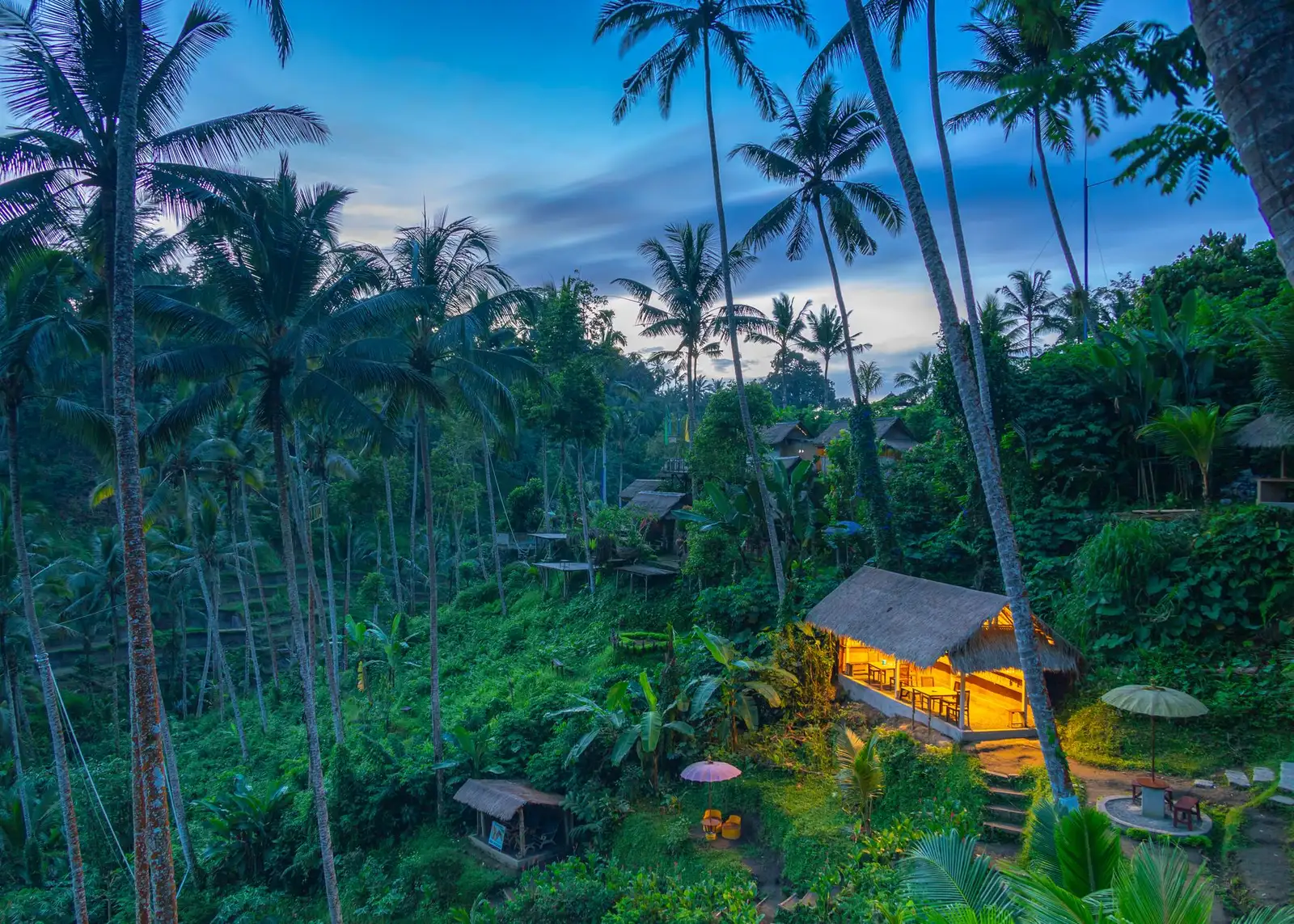

Something is shifting in how executive teams think about offsites. It's not just about leaving the office anymore. The location itself has become a strategic choice, and more leadership teams are asking a harder question before they book: what's the actual footprint of this trip?
Sustainable executive retreats have moved well past the "plant a tree as an offset" phase. The destinations to consider in 2026 are places where the infrastructure, the local economy, and the natural environment are actually working together. Not performative. Built to last.
This guide covers the destinations that deliver both the setting your team needs for strategic thinking and the environmental credibility that holds up to scrutiny.
Why Destination Choice Is the Biggest Lever You Have
You can bring reusable water bottles. You can go paperless in every session. You can offset flights. All of that is fine, but none of it moves the needle the way choosing the right destination does.
When you book a retreat at a property that runs on renewable energy, sources food locally, employs staff from the surrounding community, and was designed with minimal land disruption... you've already done the heavy lifting. The rest is maintenance.
The destinations below weren't selected because they have a nice logo or a vague "green policy" on their website. They made this list because they've built sustainability into how they operate, and because they're excellent places for an executive team to disconnect, think clearly, and come back sharper.
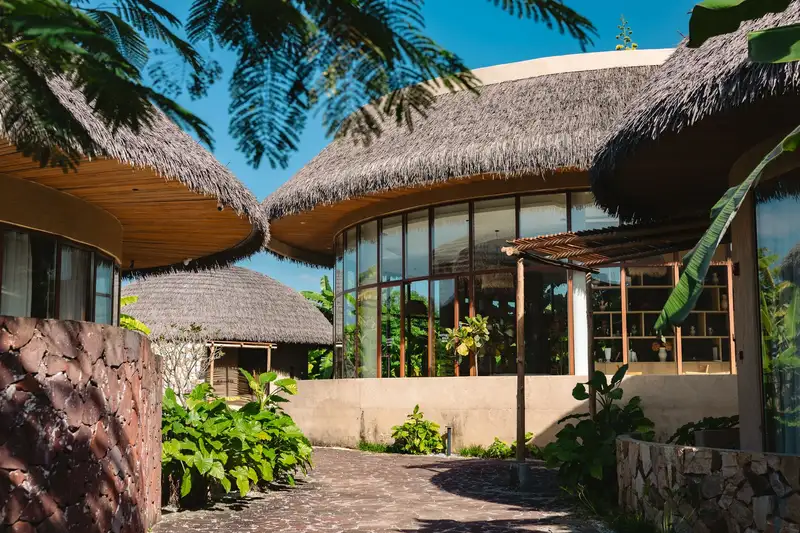
1. Finca Rosa Blanca, Costa Rica (Heredia Province)
Costa Rica has been doing this longer than most countries, and Finca Rosa Blanca, a coffee estate and boutique lodge in the hills above Santa Bárbara de Heredia, is one of the clearest examples of how it should be done.
The property runs almost entirely on solar energy. Rainwater collection feeds irrigation. The organic coffee farm on-site is certified by the Rainforest Alliance, and the kitchen pulls from that farm and neighboring producers. When you eat dinner there, your food traveled maybe 50 miles to reach your plate.
For executive retreats, Finca Rosa Blanca works particularly well for smaller leadership groups: think 10 to 20 people. The meeting spaces are open-air or semi-open, which does something interesting to how conversations unfold. People think differently when there's a breeze and a view of the Central Valley. The agenda tends to breathe a little more.
Costa Rica as a whole generates over 98% of its electricity from renewable sources in most years, which means that even your ground transportation and air conditioning aren't pulling from a coal grid. That carries weight.
2. Longitude 131°, Northern Territory, Australia
Some destinations earn their place on this list because of what they've built. Longitude 131° earns it partly because of what they've chosen not to build.
The camp sits at the edge of Uluru-Kata Tjuta National Park, and the design philosophy has always been about minimal footprint. Raised platforms. Tented structures. No concrete poured into the red earth. The 16 luxury tents are solar-powered, and the operation works in close partnership with the Anangu traditional owners of the land, which means the economic benefit of the retreat stays local.
This is a destination for executive teams that want to be changed by the experience. Uluru at dawn, with no other group nearby, does something to a room full of leaders that a hotel conference center simply cannot replicate. It strips away the noise. The complicated flight connections justify the trip.
The U.S. National Park Service has documented similar effects in nature-based settings, the NPS sustainability resources outline how immersion in protected natural environments shapes behavior and decision-making in ways that built environments don't. The evidence is there if you want it.
3. Whitepod Eco-Luxury Resort, Les Cerniers, Switzerland
The Swiss Alps have no shortage of luxury retreats. Finding one that takes its environmental responsibilities seriously without using that as a marketing excuse to charge more for less... that's harder.
Whitepod, in the Valais canton near Les Cerniers, gets it right. The geodesic pods sit on rotating platforms so they can be positioned without disturbing the terrain. Heating comes from wood pellets sourced from local forests. The property doesn't run snowmobiles or motorized vehicles across the mountain, which is a more significant commitment than it sounds in a ski region.
For winter retreats specifically, January through March is the sweet spot, Whitepod offers sensory isolation that's useful for strategic planning. Your team is in the Alps. There's no spa bar, no casino, no conference center with a dozen other groups running concurrent sessions. It's quiet in a way that cities and hotel towers aren't.
The food program leans heavily on Valais producers: local cheese, regional wines from the Rhône valley, meat from farms within 50 kilometers. Whoever handles your retreat catering will have very little to complain about, because the sourcing is already done well.
4. Bambu Indah, Ubud, Bali, Indonesia
Ubud is overused as a retreat destination. That's true. But Bambu Indah isn't overused, and the distinction matters.
The property, built by John and Cynthia Hardy (the founders of Green School Bali), is a legitimate experiment in sustainable construction. The open-air suites are built from reclaimed materials: antique Javanese joglo houses, bamboo structures, river stones. The organic farm on-site produces a significant portion of what the kitchen serves. There's a river running through the property, and the approach to water management there is thoughtful.
For executive retreats, Bambu Indah works best for groups that want to combine strategic sessions with cultural depth. Ubud's arts community, its food culture, and the Balinese approach to ceremony and communal life all offer something for leadership teams to think about. It's not a distraction from the work; it tends to enrich it.
If your team is spending any significant time around shared meals in Bali, it's worth understanding how Indonesians and the broader Southeast Asian dining culture actually functions. Similarly, understanding how Italians approach a long meal together (the pacing, the silence, the unspoken rhythms) can reframe how your team thinks about shared time. There's a good piece on exactly that at livedbylocals.com that's worth reading before any international offsite.
5. Hacienda AltaGracia, Pérez Zeledón, Costa Rica
Yes, Costa Rica appears twice on this list. That's not an accident.
Hacienda AltaGracia is a different kind of property than Finca Rosa Blanca: larger, more remote, set in the Chirripó foothills in the southern zone of the country. The focus here is on the working ranch and wellness components, and the sustainability approach is built into the land management. The hacienda works with local conservation groups to maintain wildlife corridors across the property, which covers over 800 acres.
For executive teams of 20 to 40 people, AltaGracia has the space and the infrastructure to run full multi-day retreats without feeling crowded. Meeting spaces can be configured for everything from intimate board discussions to full leadership summits. The equestrian program, the coffee tours, and the hiking trails are all operated with a clear understanding of the land's limits.
What makes AltaGracia particularly interesting for 2026 is its investment in regenerative agriculture on the ranch itself. The team can walk through those practices during a session break, and the conversation that follows, about what it means to build systems that restore rather than sustain, tends to be one of the better strategic conversations of the retreat. Every single time.
6. Clayoquot Wilderness Resort, British Columbia, Canada
Six hours from Vancouver by float plane and boat. That's not a deterrent. That's the point.
Clayoquot sits in the UNESCO Biosphere Reserve on the west coast of Vancouver Island, and it operates on a remote footprint. Canvas tent accommodations, a main lodge built from salvaged timber, and a food program that pulls from Pacific Northwest foragers, fishers, and farmers. The kitchen team here is exceptional: this isn't "sustainable food" as a compromise, it's some of the best cooking in Canada in any category.
The wilderness setting does the work that facilitators often struggle to do: it creates actual presence. When you're sitting on the edge of Clayoquot Sound watching gray whales in April, the quarterly numbers feel appropriately small. The strategic conversations that follow tend to be more candid than the ones that happen in hotel meeting rooms with bad fluorescent lighting.
For executive retreat groups, the property accommodates a maximum of 25 guests at a time, which keeps it intimate. Booking for the 2026 season, particularly May through September, should happen no later than January 2026. It fills quickly, and there's no equivalent backup option in the region.
7. Segera Retreat, Laikipia Plateau, Kenya
If your executive team is ready to think about retreats in Africa, Segera is the destination that makes the most sense from a sustainability standpoint in 2026.
The property is owned by Jochen Zeitz (the former CEO of Puma, later co-founder of The B Team), and it's structured as a conservancy, not just a lodge. The 50,000-acre Segera Conservancy in Laikipia actively manages wildlife populations, employs hundreds of people from surrounding Maasai communities, and runs a carbon offsetting program that's been independently verified. You're not staying at a safari lodge that's bolted on some green language. You're staying inside an active conservation project.
Meeting facilities are limited and intimate, which suits groups of 8 to 15 executives well. The days tend to structure themselves: early morning game drives, late morning strategy sessions, afternoons in the field. The rhythm works. It's a harder sell to a CFO reviewing a budget line, but teams that have done it tend to come back saying it was the most effective retreat they've ever run.
What to Actually Ask Before You Book
Here's where a lot of retreat planners go wrong. They look at a beautiful property with a "sustainability" section on the website and assume the work is done.
It isn't.
Ask the property directly: What percentage of your energy comes from renewable sources? Where does your food come from, and can you document that? What percentage of your staff are from the local community? Do you have a third-party certification, and if so, which one: Rainforest Alliance, B Corp, Green Globe, or something else?
A property that can't answer those questions clearly is marketing sustainability without practicing it. The destinations on this list can answer those questions. Most can answer them in detail.
For nature-based retreat locations, it's worth understanding how different jurisdictions approach conservation standards. The National Park Service's sustainability framework offers a useful baseline for thinking about what responsible land use actually looks like in practice, even if your retreat is outside the U.S.
Logistics That Actually Matter for Eco-Conscious Retreats
Getting your team to a remote or international destination has a carbon cost. That's true, and it's worth being honest about rather than ignoring.
A few practical approaches that make a difference...
Flight consolidation: If your team is flying from multiple cities, routing through a single hub and flying together on the final leg cuts emissions meaningfully. It also improves group cohesion before the retreat even starts, which isn't nothing.
Ground transportation: Rent electric vehicles where the local infrastructure supports it. Costa Rica, Switzerland, and parts of Canada have solid EV infrastructure now. Kenya and remote Australia less so: be realistic.
Length of stay: This one matters more than people realize. A 4-day retreat in Laikipia, Kenya has a higher per-day carbon cost than a 4-day retreat in Switzerland, because of flight distance. But a 7-day retreat in Kenya has a lower carbon-per-day ratio than a 2-day retreat in the same location. Going further justifies going longer. If you're flying 10 hours, staying for two days is hard to defend.
Offset programs: Use them, but don't rely on them as your primary strategy. Offsets are a backstop, not a plan. The destination choice, the length of stay, and the ground logistics are where the real decisions live.
The Right Size Group for Sustainable Retreat Destinations
Most of the destinations on this list work best for groups of 8 to 25 people. That's not a coincidence.
Sustainable properties tend to be smaller. They're operating with tighter land footprints, local supply chains that can't scale infinitely, and staff teams that are sized to match. When you bring 80 people to a property designed for 25, the sustainability commitments or the experience quality breaks.
For larger leadership teams, the better approach is splitting into two separate retreat groups at locations in the same region, running on the same dates with the same agenda. It's more complex to plan, yes. But it tends to produce better outcomes anyway, because smaller groups have more candid conversations.
2026-Specific Considerations
A few things to flag for the 2026 planning cycle.
Costa Rica is likely to see higher demand than usual following several high-profile corporate sustainability commitments made in 2024 and 2025: book early. Whitepod in Switzerland has been expanding its corporate retreat capacity, and the new meeting pod (added in late 2025) makes it more viable for groups up to 18 than it was previously. Clayoquot in British Columbia should be watched closely: wildfires in the 2024 season affected parts of Vancouver Island, and while Clayoquot itself was unaffected, it's worth confirming accessibility before finalizing plans.
For any destination in the Southern Hemisphere or East Africa, verify the latest entry requirements and any local conservation regulations that might affect group size or activity options. These change more frequently than most retreat planners anticipate.
The Honest Bottom Line
Sustainable executive retreats aren't a niche preference anymore. Leadership teams that spend time in environments built around genuine ecological responsibility tend to leave with a recalibrated sense of what "long-term" actually means.
That's not marketing language. It's what happens when you put a group of executives in Clayoquot Sound or on the Laikipia Plateau and give them two days to think without interruption.
The destinations on this list are places where the setting does work. Not backdrop. Not optics. The land, the food, the people running the operation: all of it is pointed in the same direction.
That's rare. And when you find it, it changes the quality of what your team is able to do together.
Comments (0)
No comments yet. Be the first!