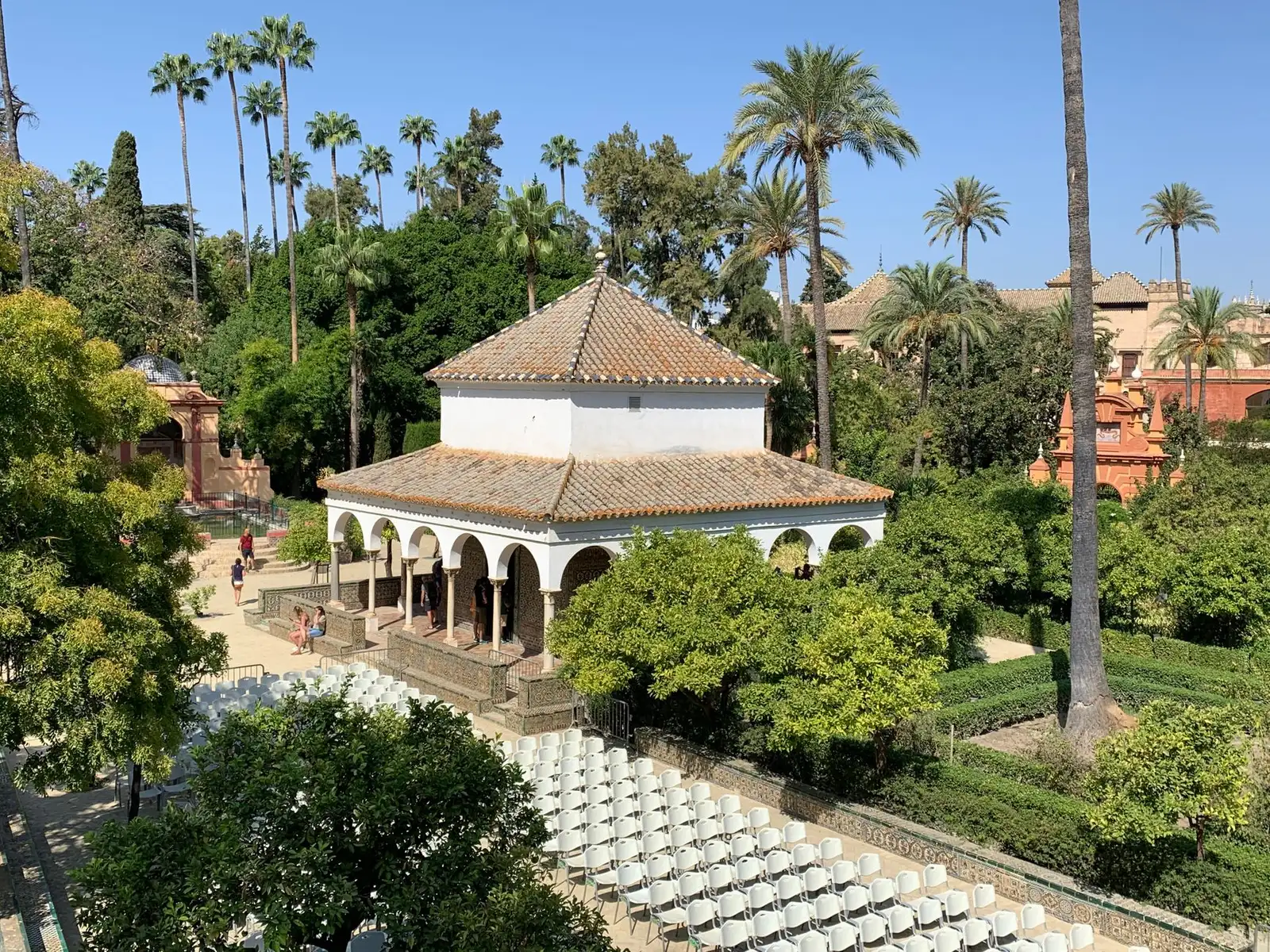

Few regions in Europe carry the kind of atmospheric weight that makes executives stop thinking about their inboxes. Andalusia does. The light in Seville in October, the silence inside the Alhambra before the tourist groups arrive, the smell of orange blossom cutting through diesel on Calle Betis at dusk, these aren't background details. They're the mechanism. When the environment arrests attention, people stop performing and start thinking.
That's the case for Andalusia as an executive retreat destination. Not the weather, not the food (though both are reasons enough), but the region's peculiar ability to interrupt the cognitive autopilot that most senior leaders run on by default. If your offsite goal is a shift in how the team thinks about itself, Andalusia is unusually well-suited. If it's purely decision-production, you might want a conference center in Frankfurt instead.
Here's what works, what doesn't, and how to put together three to five days that justify the trip.
The Venues Worth Knowing
Seville: Haciendas Over Hotels
Seville is the obvious anchor city, and the instinct to book a five-star hotel on Avenida de la Constitución is understandable. Resist it. Urban luxury hotels in Seville, the Alfonso XIII, the Gran Meliá Colón, are excellent for individual business travel. For an executive group of 8 to 20 people, they create the same problem as every other city hotel: your team is never fully extracted from normal life. The lobby has other guests. The bar is public. The meeting room feels like every other meeting room.
The better option sits 20 to 40 minutes outside the city. The working haciendas of the Aljarafe hills and the Carmona corridor were built for exactly this kind of use, even if they didn't know it at the time. Hacienda de San Rafael, near Las Cabezas de San Juan, is the clearest example: 11 suites, a private pool, a kitchen team that will cook for you specifically, and enough separation from everything else that the evening conversation runs long in the right way. It's small. That's the point. Groups above 16 will exceed its capacity and lose what makes it work.
For slightly larger groups (up to 30), Hacienda Benazuza in Sanlúcar la Mayor has the infrastructure: proper AV-capable meeting rooms, a wellness center, and enough land that people can decompress between sessions. It's 15 minutes from the Seville ring road, which matters when you're coordinating airport transfers from Aeropuerto de Sevilla SVQ.
Granada: The Parador Logic
The Parador de Granada sits inside the Alhambra complex itself, which is either the most extraordinary meeting location in Europe or a distraction you cannot manage, depending on your agenda. On balance: it's worth it, but only if you've designed the program to use the location. Trying to run a full-day strategy workshop while the Nasrid Palaces are visible from the terrace is a losing battle. Use the first day for orientation and the Alhambra experience, then pivot to structured work on day two when the novelty has settled.
The Parador's meeting facilities are serviceable, not exceptional. Rooms hold 15 to 20 comfortably. AV requires advance coordination with local suppliers (more on that below). The value is entirely in the location and the hotel's willingness to arrange private access to the Alhambra grounds, early morning, before the 8,000 daily visitors arrive. That experience, a senior team walking the Court of the Lions at 7:15am with a specialist guide and nobody else around, is not replicable anywhere else. It's worth building the entire itinerary around.
For groups that want Granada's energy without the Parador's limitations, Carmen de la Florentina in the Albaicín neighborhood offers private villa rental with views across to the Alhambra. Smaller (8 to 12 people), but the privacy is total.
Málaga and the Coast: When You Need Scale
Málaga is where the logistics get easier and the magic gets thinner. The Finca Cortesín near Casares, about 90 minutes southwest of Málaga Airport AGP, is the closest thing the Costa del Sol has to a luxury retreat property: 67 rooms, serious wellness facilities, a golf course nobody is forcing you to use, and meeting spaces that actually work for 30-plus executives. The food is better than it needs to be. The privacy is substantial.
If your group is 25 or above, the Finca Cortesín math works. Below that, you're paying resort-scale prices for a property that wasn't designed around your group.
Villa Padierna Palace in Benahavís is the other serious option in this corridor: similar scale, slightly more theatrical in its architecture, strong wellness programming. Both properties have direct relationships with Málaga-based AV and event technology suppliers, which eliminates one coordination headache.
Building the Itinerary
The 3-Day Model: Decision-Focused
Three days works when the offsite has a clear output, a strategic decision, a budget alignment, a leadership team reset following a restructure. Keep the experiential elements concentrated at the beginning and end. The middle day is work.
Day 1, Seville or Granada arrival. Transfers from SVQ or AGP, depending on your anchor city. Afternoon arrival, room time, a single orientation dinner, long, good wine, no agenda. The point is to let the travel decompress before the work starts. A private sherry tasting at González Byass in Jerez de la Frontera (90 minutes from Seville) works well here if you can route arrivals through it; the bodega's private salon holds 20 and the experience is specific enough to be memorable.
Day 2, full working day. Six to seven hours of facilitated sessions, two breaks, a working lunch. No sightseeing. This is the day the offsite justifies itself commercially. Build in a 90-minute unstructured window in the afternoon, not optional, not "free time", where people walk, swim, or sit quietly. The research on cognitive recovery during intensive work sessions is consistent: the afternoon session after a genuine break outperforms the one after a working lunch.
Day 3, morning session and departure. Two to three hours of synthesis and next-steps work. Depart by early afternoon. Don't try to fill the morning with another experience. The group is mentally ready to leave by day three; fighting that burns goodwill.
The 5-Day Model: Culture and Transformation
Five days in Andalusia is fundamentally different from three. The first two days are still adjustment; the real work happens in days three and four when the unfamiliar environment has had time to do its job.
Days 1-2: Arrival and orientation. Fly into Málaga, transfer to the Serranía de Ronda or the white villages (pueblos blancos) of Cádiz province. Ronda's Parador sits on the edge of the El Tajo gorge with views that stop conversations mid-sentence. Two nights here, light programming, a private walking tour of Ronda's old town with a historian, dinner at Bardal (two Michelin stars, 12 covers, book months ahead), an optional morning ride into the surrounding countryside. The goal is not productivity. It's arrival.
Day 3: Move to the primary venue. Seville or Granada, depending on the group's focus. Half-day transit, afternoon check-in, first facilitated session (two hours maximum) in the early evening. This is when the offsite work formally begins.
Days 4-5: Core programming. Full working days with the experiential elements used as structural breaks. The private Alhambra dawn visit fits here as a morning reset before a full afternoon session. A flamenco performance in a private tablao in the Triana neighborhood of Seville, not the tourist version, an actual private performance by professional artists in a space that holds 20, works as an evening closer that doesn't require further conversation. People go to bed thinking about something that isn't the whiteboard.
Day 5 departure. Morning synthesis, early afternoon flights from SVQ or AGP.
Seasonal Timing
Get this wrong and the logistics are miserable. Andalusia in July and August is 42 degrees Celsius in Seville and the Alhambra at noon is an endurance test. September and October are the best months for executive retreats: temperatures drop to the high 20s, the summer tourist volume collapses after the first week of September, and the light is extraordinary. Late October into November still works well; the Alhambra gardens are at their most dramatic.
March and April are viable but carry Easter week risk. Semana Santa in Seville is one of the most intense public events in Europe. It's also a complete logistical nightmare for a group trying to move between venues. Check the calendar before you book anything for the April window.
December and January are underrated. The Alhambra with occasional snow on the Sierra Nevada behind it is a specific kind of beautiful, and pricing at most properties drops 25 to 35 percent from peak. The Finca Cortesín in February is almost entirely private.
AV, Tech, and Local Logistics
This is where Andalusia retreats most often underdeliver, and where advance preparation pays disproportionate returns.
The hacienda and parador properties do not maintain in-house AV infrastructure at the level corporate groups expect. They're not conference centers. For anything beyond a projector and a screen, you need a local supplier. In Seville, Audiovisuales Sevillanos and Grupo Eventour both have experience with executive groups and can supply full conference packages, simultaneous translation booths, wireless presentation systems, modular staging, with 3 to 4 weeks' notice. In Granada, the supplier network is thinner; your venue coordinator needs to be the one making these introductions, not you.
Fiber internet at rural haciendas is increasingly reliable but not guaranteed. Test it on arrival. Have a mobile data backup plan. A 4G router from Vodafone Spain (available at any major airport) costs around €80 for a week and has saved more than one offsite from a connectivity crisis.
For ground transport, book a dedicated vehicle and driver for the group's duration. Transfers from Málaga Airport AGP to venues in the Ronda corridor or the Costa del Sol take 90 minutes to two hours in typical traffic; having a dedicated vehicle means departure times flex around the program rather than around a taxi booking. The cost difference between a dedicated vehicle and per-transfer booking for a group of 12 over five days is usually negligible, and the reduction in coordination friction is significant.
The Alhambra: What Private Access Actually Means
Every luxury operator will tell you they can arrange "exclusive Alhambra access." The phrase has been diluted to meaninglessness. Here's what actually exists.
The Alhambra opens to the general public at 8:30am. Ticket allocation is fixed and regularly sells out months in advance. What private operators can arrange is early-morning access to the Generalife gardens and selected areas of the complex before general opening, through coordination with the Patronato de la Alhambra y el Generalife. This is possible and it requires a specialist guide with the appropriate accreditation and a booking made weeks in advance. What no operator can arrange is exclusive access to the Nasrid Palaces during general opening hours. Anyone who tells you otherwise is either mistaken or overstating their relationships.
The early-morning experience is worth the logistics. A group of 12 executives walking the Patio de los Arrayanes at 7:30am with a specialist art historian and no other visitors is one of the few extraordinary experiences available to corporate groups in Europe. It costs around €2,500 to €3,500 for the guide and coordination, and it takes the conversation somewhere that the agenda couldn't have predicted.
What to Skip
A few things that sound right but don't work for executive groups.
Cooking classes. They're popular in Andalusia and they're fine for leisure travel. For a senior leadership team on a working retreat, the group dynamics of a cooking class (competitive, hierarchical, physically awkward) tend to produce the opposite of what the offsite is trying to achieve. A private dinner cooked by someone else, with enough time and wine to let the conversation run, works better.
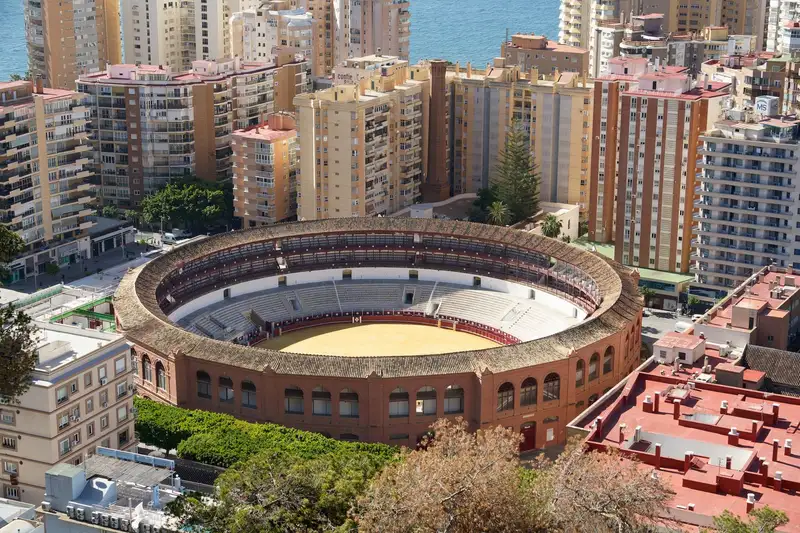
Bullfighting. It comes up as an "authentic Andalusian experience" in some operator proposals. The political and ethical landscape around it has shifted enough that it's a liability for corporate groups. Leave it out.
Day trips to Morocco. Tangier is 45 minutes by ferry from Tarifa. The trip sounds compelling in the planning phase and consumes an entire day of a short offsite for an experience that rarely lands as intended. If the group has five days and the Morocco crossing is the explicit goal, fine. As a side trip during a working retreat, it's too much friction for too uncertain a return.
Making the Case Internally
The conversation that precedes most executive offsites is about cost justification, and Andalusia requires more of it than, say, a branded conference hotel in Barcelona. The numbers to know: a five-day exclusive-use hacienda rental for 12 people including accommodation, meals, and basic programming runs €35,000 to €60,000 depending on property and season. Add AV, specialist guides, and private experiences and you're at €50,000 to €75,000 total. That's €4,000 to €6,000 per person for five days.
For context: a comparable program at a Marriott-tier conference resort in northern Spain runs €2,500 to €3,500 per person. The Andalusia premium is real. Whether it's justified depends on what the offsite is trying to do. If the answer is "get 12 people who've been working at maximum capacity for two years to actually recalibrate," the environment premium earns its cost. If the answer is "finalize Q4 budget," it doesn't.
For more on this, see Partners.
The best executive offsites in Andalusia work because the region is disorienting in the productive sense, architecturally, culturally, atmospherically different enough from Northern European or American corporate life that it forces a change of register. That's not a luxury rationale. It's a functional one. The Alhambra at dawn changes the conversation.
Comments (0)
No comments yet. Be the first!